
Hong Kong Lawmakers Unanimously Approve Security Law Giving Government More Power to Curb Dissent
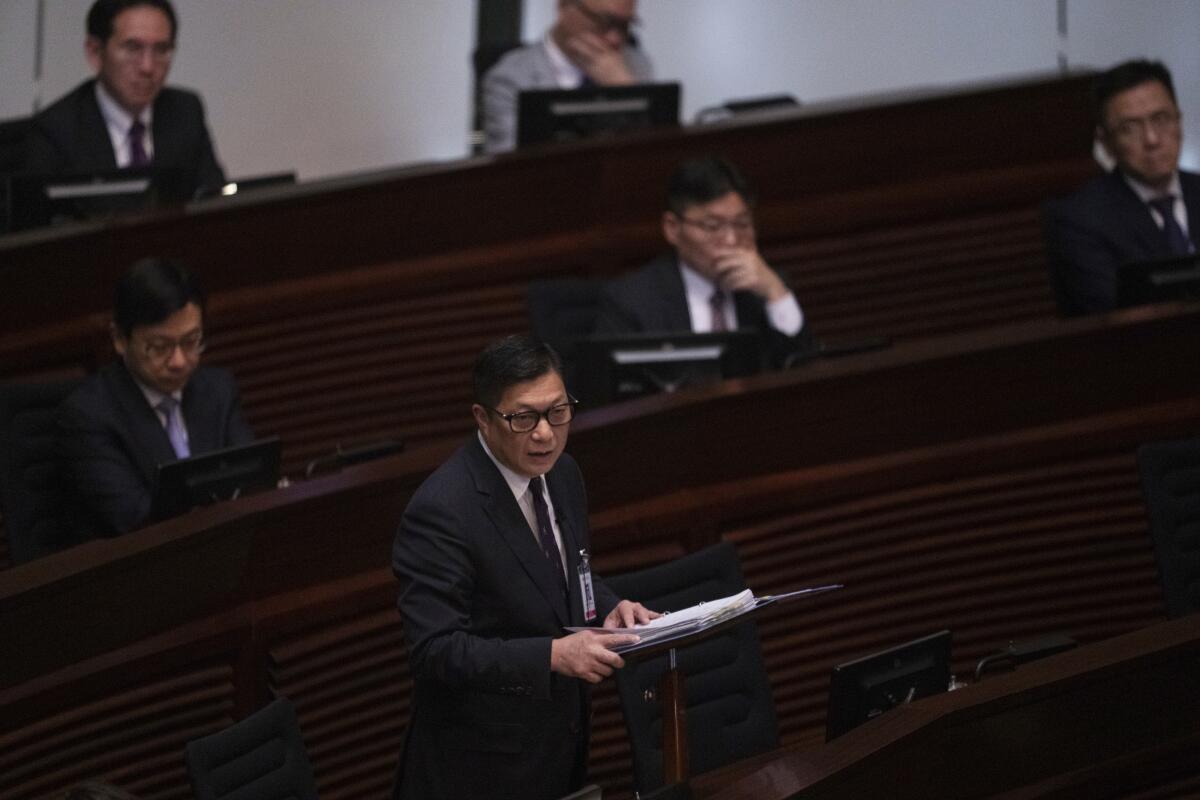
In a move that has sent shockwaves through the international community, Hong Kong lawmakers unanimously approve security law giving government more power to curb dissent. This legislation, passed with little opposition, marks a significant turning point in the city’s ongoing political saga, as it fundamentally alters the landscape of civil liberties and governance in Hong Kong. The law, which grants the government sweeping powers to suppress opposition, has sparked widespread concern both locally and globally, raising questions about the future of one of the world’s most prominent financial hubs.
The Law: An Overview
The newly passed security law is broad in scope and far-reaching in its implications. Hong Kong lawmakers unanimously approve security law giving government more power to curb dissent, effectively handing the authorities unprecedented control over political expression and civil activism. The legislation is designed to target acts of secession, subversion, terrorism, and collusion with foreign forces, but critics argue that its vague wording leaves it open to wide interpretation, which could be used to stifle legitimate dissent and free speech.
Under the new law, the government has the authority to establish its own security agencies within Hong Kong, which operate independently of the local legal system. These agencies are empowered to carry out arrests, conduct surveillance, and enforce the law without the same level of oversight that typically characterizes the city’s legal processes. Moreover, the law allows for the possibility of transferring certain cases to mainland China for trial, a prospect that has deeply unsettled those who fear the erosion of Hong Kong’s judicial independence.
The Legislative Process
The process by which Hong Kong lawmakers unanimously approve security law giving government more power to curb dissent was as swift as it was decisive. The law was introduced with little public consultation, and the speed at which it was passed has drawn criticism from various quarters. Pro-democracy lawmakers were largely sidelined in the legislative process, with many either resigning in protest or being disqualified from participating in the vote. This left the legislative body overwhelmingly composed of pro-Beijing members, ensuring that the law’s passage was all but guaranteed.
Supporters of the law argue that it is necessary to restore stability to Hong Kong following the protracted and sometimes violent protests that have gripped the city over the past few years. They contend that the law will deter future unrest and protect Hong Kong from foreign interference. However, opponents view the law as a tool of repression, designed to quash the pro-democracy movement and consolidate Beijing’s control over the territory.
Implications for Civil Liberties
The implications of Hong Kong lawmakers unanimously approve security law giving government more power to curb dissent are profound, particularly for the city’s civil liberties. The law’s passage signals a dramatic shift away from the “one country, two systems” principle that has governed Hong Kong since its handover from Britain to China in 1997. This principle was supposed to guarantee Hong Kong a high degree of autonomy and preserve its distinct legal and political systems for at least 50 years. However, the new security law is widely seen as undermining these guarantees.
One of the most immediate effects of the law is the chilling effect it has had on political discourse. Activists, journalists, and ordinary citizens alike now face the prospect of legal action for expressing opinions that could be construed as violating the law. The fear of reprisal has already led to the disbanding of several pro-democracy groups, and many prominent activists have fled the city or gone into hiding. Social media platforms, once vibrant with political debate, have seen a marked decrease in activity, as users fear that their online comments could be used as evidence against them.
International Response
The passage of Hong Kong lawmakers unanimously approve security law giving government more power to curb dissent has drawn widespread condemnation from the international community. Governments and human rights organizations around the world have expressed deep concern over the law’s implications for freedom of speech and the rule of law in Hong Kong. The United States, the European Union, and several other countries have issued statements condemning the law and calling for its repeal.
In response to the law, some countries have taken concrete actions, such as imposing sanctions on Chinese and Hong Kong officials deemed responsible for implementing the law. Others have offered asylum or expedited immigration pathways to Hong Kong residents seeking to flee the city. The law has also led to a reevaluation of Hong Kong’s special trade status with several countries, further isolating the city on the international stage.
The Future of Hong Kong
As Hong Kong lawmakers unanimously approve security law giving government more power to curb dissent, the city finds itself at a crossroads. The passage of the law represents a clear victory for the Chinese government in its efforts to bring Hong Kong more fully under its control, but it also risks alienating a significant portion of the city’s population. The long-term consequences of this law will likely be felt for years to come, as Hong Kong grapples with its identity and its place within the broader context of Chinese sovereignty.
For many Hong Kong residents, the law represents the end of an era. The freedoms that once defined the city are now under threat, and the prospects for meaningful political reform appear increasingly remote. While the law may bring a semblance of order in the short term, it also raises the specter of long-term instability, as disillusioned citizens seek new ways to express their dissent and assert their rights.
Conclusion
The decision by Hong Kong lawmakers unanimously approve security law giving government more power to curb dissent marks a watershed moment in the city’s history. It is a law that fundamentally alters the relationship between the government and the governed, reshaping the political landscape in ways that are likely to have far-reaching and lasting effects. As Hong Kong navigates this new reality, the world will be watching closely, keenly aware that the city’s struggle for autonomy and freedom is far from over.